


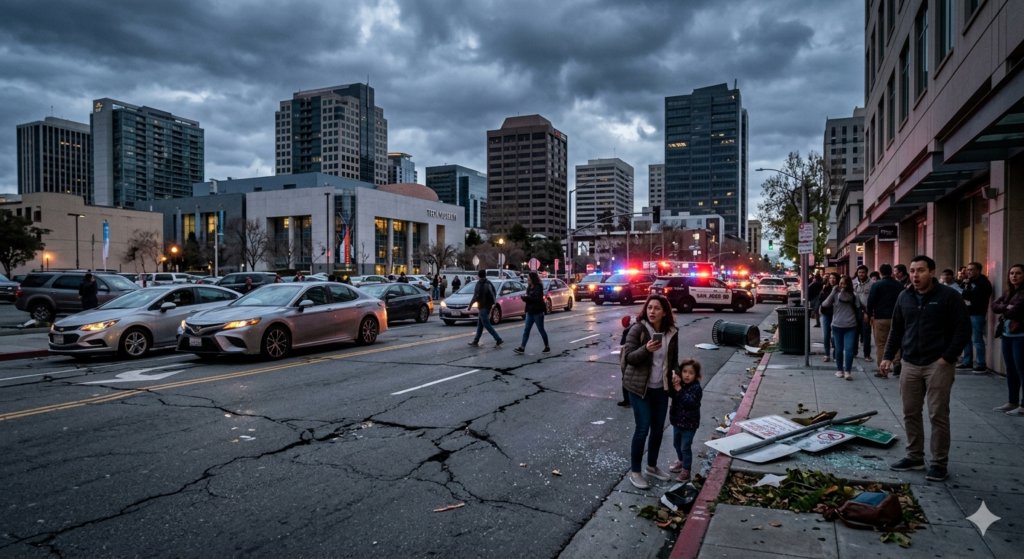
Earthquake San Jose: Latest Updates, Fault Lines, Safety Tips, and What Bay Area Residents Must Know Right Now
If you live in San Jose or the South Bay, you’ve probably felt the ground rumble more than once. Just this morning on April 2, 2026, a magnitude 4.8 earthquake struck near Boulder Creek in the Santa Cruz Mountains—only about 20 miles from downtown San Jose.
Thousands of people across the Bay Area reported feeling it, with many describing a sharp jolt followed by rolling shakes lasting 10–15 seconds. Thankfully, no major damage or injuries have been reported so far—but it’s a strong reminder that San Jose sits in one of California’s most active seismic zones.
If you’re wondering, “Was that an earthquake San Jose felt today?” or “How dangerous could the next one be?”, this guide has everything you need.
📌 Table of Contents
- Latest Earthquake San Jose Updates
- Why San Jose Shakes: Causes and Fault Lines
- Historical Earthquakes in the Bay Area
- Understanding Earthquake Magnitude
- Earthquake Safety Tips (Step-by-Step)
- Earthquake Alerts & Updates
- How to Prepare Your Home
- FAQs
- Conclusion
📍 Latest Earthquake San Jose Updates
Recent seismic activity in the Bay Area includes:
- Magnitude 4.8–4.9 earthquake near Boulder Creek (April 2, 2026)
- Depth: ~10–11 km
- Felt across San Jose, Santa Cruz, and nearby regions
- Over 1,200 people reported feeling it
Recent Activity:
- Last 24 hours: 3 earthquakes (M1.5+)
- Last 7 days: 19 earthquakes
- Last 30 days: 76 earthquakes
Small tremors are common in California and usually harmless—but they remind us to stay prepared.
🌍 Why San Jose Shakes: Causes and Major Fault Lines
Earthquakes in San Jose happen due to movement between the Pacific Plate and North American Plate.
- San Andreas Fault – Major fault west of the city
- Calaveras Fault – Runs through eastern San Jose
- Hayward Fault – Dangerous nearby fault
- San Gregorio Fault – Offshore contributor
Experts estimate a 72% chance of a major earthquake (M6.7+) in Northern California within the next 30 years.
📜 Historical Earthquakes That Impacted the Region
- 1989 Loma Prieta (M6.9) – Massive damage, 63 deaths
- 1906 San Francisco (M7.9) – One of the worst disasters in U.S. history
These events prove that large earthquakes are a real risk—not just theory.
📊 Understanding Magnitude
- M2–3: Light or not felt
- M4–5: Noticeable shaking (like recent quake)
- M6+: Strong damage possible
- M7+: Severe destruction
Shallow earthquakes feel stronger compared to deeper ones.
⚠️ Earthquake Safety Tips (Step-by-Step Guide)
Before an Earthquake
- Secure heavy furniture
- Prepare emergency kit
- Create family emergency plan
- Install earthquake alert apps
During an Earthquake
- Drop to the ground
- Cover your head
- Hold On until shaking stops
After an Earthquake
- Check injuries
- Watch for aftershocks
- Check gas leaks
- Stay updated via news
📡 Earthquake Alerts & Updates
- Use USGS Earthquake app
- Download MyShake app
- Follow local news channels
🏠 Preparing Your San Jose Home
- Secure shelves and appliances
- Backup important data
- Keep emergency supplies ready
- Practice safety drills with family
❓ FAQs About San Jose Earthquakes
Was there an earthquake today in San Jose?
Yes, a magnitude 4.8 earthquake was recorded near Boulder Creek.
How often do earthquakes occur?
Small earthquakes happen regularly every month.
Is a big earthquake coming?
Experts predict a high chance in coming decades.
What should I do during an earthquake?
Follow Drop, Cover, and Hold On method.
✅ Conclusion
Living in San Jose means earthquakes are a reality. But preparation can save lives. Take action today—secure your home, install alerts, and stay informed.
👉 Share this guide with your family and stay safe!